Last updated: 12th of September 2026
You've probably said it before:
“I'll start meal prepping next week.”
Then Monday arrives.
You grab something from the supermarket. Tuesday becomes a meal deal. Wednesday you're too busy, so you order something.
And suddenly another week has disappeared.
But here's a reason to finally do something about it that has nothing to do with having perfectly organised Tupperware.
You might be eating far more ultra-processed food than you realise.
In the UK, around 57% of the calories we eat come from ultra-processed foods. Thats over half in case you didn't realise.
Among younger people, it's even higher.
UK dietary data has put ultra-processed food at around 68% of calorie intake among 12–18 year-olds. Dr Chris van Tulleken, author of Ultra-Processed People, told Parliament that it's entirely normal for some UK diets to reach 80% ultra-processed food.
And here's another number worth knowing:
95.1%
Using UK dietary recommendations, research submitted by Van Tulleken calculated that 95.1% of ultra-processed products would qualify for at least one warning label for excessive sugar, fat, saturated fat, trans fat or sodium.
That's not to say that eating a biscuit or supermarket sandwich occasionally is going to ruin your health.
The problem is when convenience gradually becomes most of your diet.
And that's surprisingly easy to do.
Breakfast cereal.
A cereal bar.
Packaged bread.
A supermarket sandwich.
Crisps.
Chocolate.
Ready meals.
Fizzy drinks.
You can go through an entire working day eating predominantly ultra-processed food without ever thinking you've eaten particularly badly.
Why should you actually care?
Because the concern isn't simply that these foods have long ingredient lists.
A major 2024 umbrella review found that greater exposure to ultra-processed food was associated with more than 30 adverse health outcomes, with particularly concerning evidence around cardiovascular disease, type 2 diabetes, common mental-health disorders and mortality.
As with observational nutrition research generally, association doesn't prove that every individual UPF causes those conditions, but the overall pattern is concerning.
We also have controlled evidence showing something much simpler:
Ultra-processed diets can make it remarkably easy to eat more.
In an NIH randomised controlled trial, researchers gave 20 adults either an ultra-processed or minimally processed diet.
When participants were eating the ultra-processed diet, they consumed approximately:
500 extra calories every day.
They ate faster too.
And over just two weeks they gained, on average, around 0.9kg (2lb). When eating the minimally processed diet, they lost approximately the same amount.
That's quite a difference from simply saying:
“I should probably eat healthier.”
So what does this have to do with meal prepping?
Everything.
One of the biggest reasons we eat convenience food is exactly what makes it convenient:
It's already there.
You're hungry at 12:30.
You have 30 minutes for lunch.
You haven't brought anything.
You're not going home to cook chicken, potatoes and vegetables.
You're buying whatever is closest.
Meal prepping changes that equation.
Instead of trying to make yourself choose the better option when you're already hungry, you make the decision beforehand.
But there's a much easier way to start than preparing seven days of food every Sunday.
Step 1: Find out what you're actually eating
Before changing anything, spend a few days tracking your normal food.
Don't diet.
Don't suddenly become incredibly healthy.
Just pay attention.
This doesn't need to mean weighing 14 ingredients every time you eat.
Apps like Snackbox are designed specifically to make this quick.
Rather than logging:
Chicken
Bread
Cheese
Mayonnaise
Lettuce
Crisps
You can simply type:
“Chicken and cheese sandwich with mayo and a packet of crisps.”
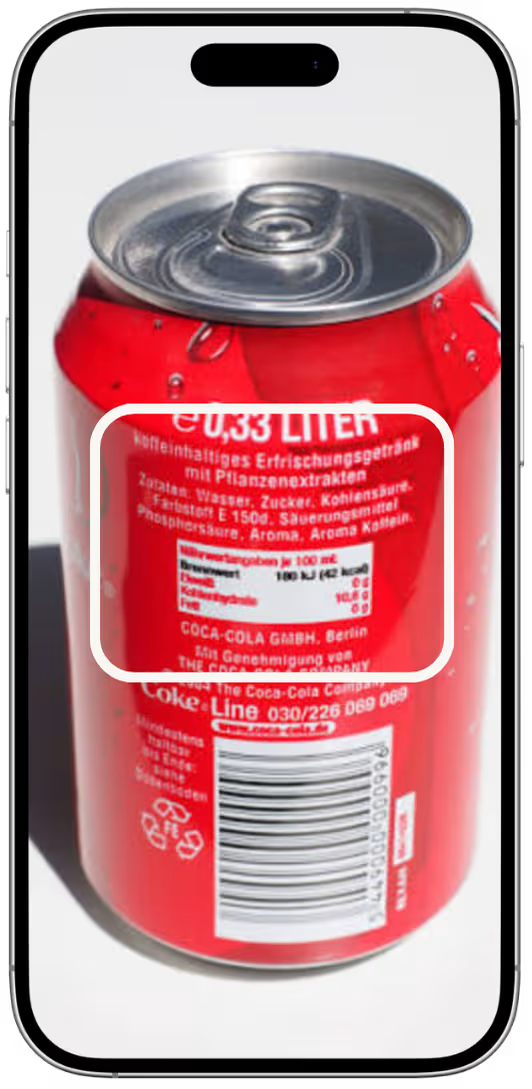
Snackbox works out the meal for you and gives you a simple breakdown showing your calories, nutrition and how processed the food you're eating is.
It takes around 10 seconds.
Log it. Put your phone away. Carry on with your day.
The point isn't to obsess over your food.
It's to finally see the pattern.
Step 2: Find the meal that's causing the problem
After a few days, have a look.
You might discover:
Breakfast: mostly good
Dinner: usually home cooked
Lunch: heavily processed almost every day
Great.
You don't need a new diet.
You don't need to meal prep breakfast, lunch, dinner and snacks.
You found the problem.
Fix that one meal.
And for a lot of busy people, that's lunch.
Step 3: Follow the 3-Lunch Rule
Forget preparing an entire week.
Your first target is ridiculously simple:
**1 meal.
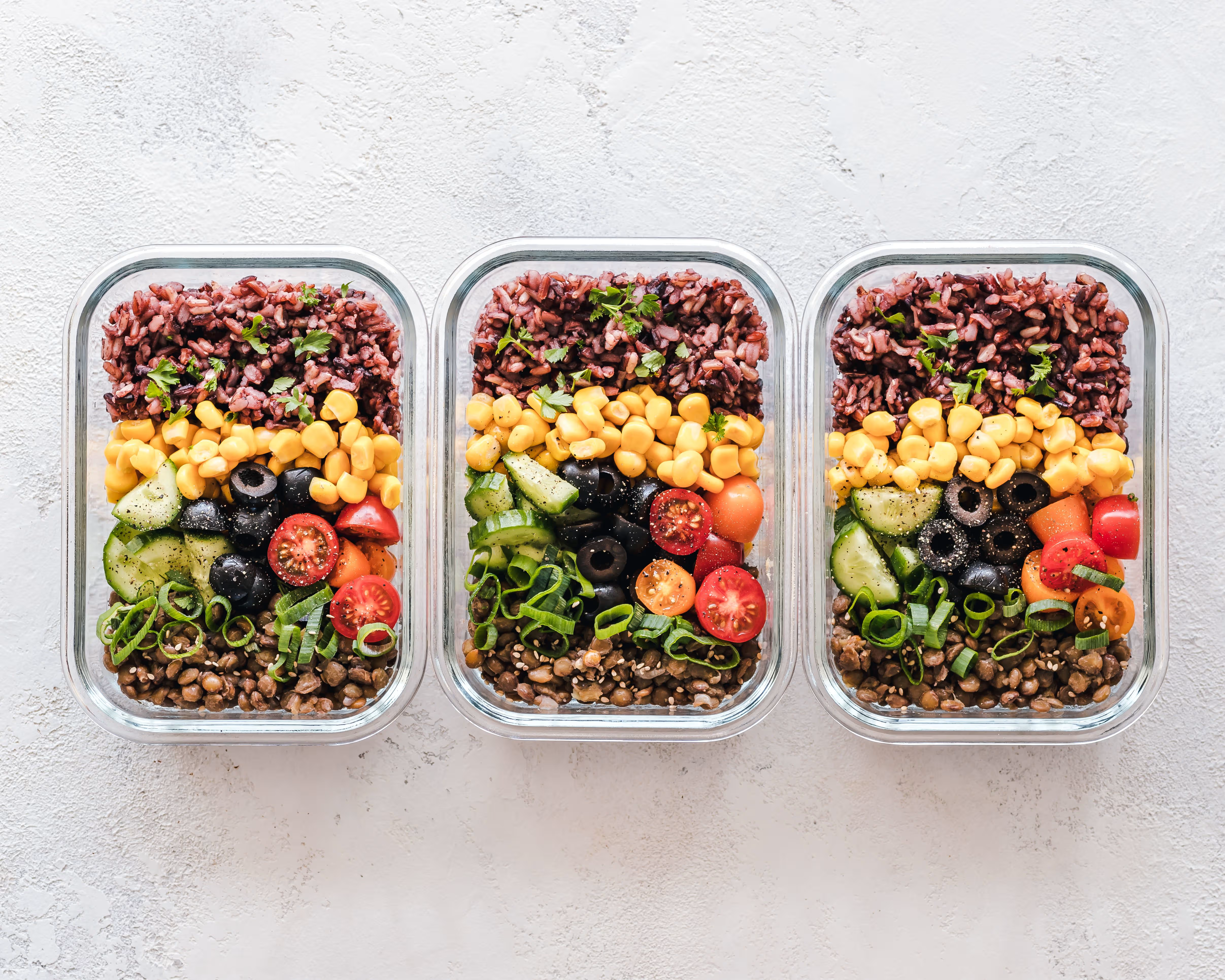
3 containers.
3 lunches.**
That's it.
And don't search for some special “meal-prep recipe.”
Cook something you already like.
Chicken and rice.
Chilli.
Pasta.
Curry.
Steak and potatoes.
Homemade burgers.
Whatever you'd normally be happy eating.
The next time you're making it, make more.
You're already chopping.
You're already cooking.
You're already washing the pan afterwards.
Making three additional portions requires far less effort than finding three separate lunches later in the week.
Suddenly:
Monday: sorted.
Tuesday: sorted.
Wednesday: sorted.
You've meal prepped.
Step 4: Make it competitive
This is where tracking becomes surprisingly useful.
If last week's lunches were mainly packaged convenience foods and this week's lunches are mostly meals you've made yourself, you can actually see the difference.
Snackbox keeps your food-quality information and progress in one simple place rather than burying you in data.
And if you're somebody who responds well to competition, show your progress to a friend.
See who can improve their week.
See who can string together the better run.
See whether you can beat your own previous week.
Healthy eating becomes much easier when progress isn't just something you're hoping is happening.
You can see it happening.
Step 5: Don't rely on remembering
There will inevitably be a Thursday when you're busy and forget.
That's why Snackbox can also give you simple reminders without constantly pestering you.
A useful reminder at the right moment is often all you need to keep one forgotten lunch from becoming:
“I'll start again next Monday.”
And that's really the goal.
Not perfection.
Not banning chocolate.
Not spending Sunday afternoon surrounded by 21 plastic containers.
Just make the better option easier than the worse one.
Try this tonight
Don't tell yourself you're going to “start meal prepping.”
That's too big.
Instead:
Track what you eat today.
Find the meal that could be better.
Then the next time you're cooking something you enjoy:
Make three extra portions.
That's it.
Once there are three lunches sitting in your fridge, you've already done the hardest part.
And if you want an easy way to see exactly what you're eating without manually entering every ingredient, Snackbox lets you describe your meal normally, tracks it in seconds and shows you how processed your food actually is.
Because the point of tracking your food isn't to spend more time thinking about food.
It's to understand it well enough that making better choices becomes easier.





%20(1).avif)
%20(2).avif)
%20(8).avif)
%20(3).avif)
%20(4).avif)
%20(6).avif)
%20(7).avif)



%20(9).avif)